Propane tank laws and permits in Florida: what homeowners need to know
By Mei Larsen · Updated 2026-07-20
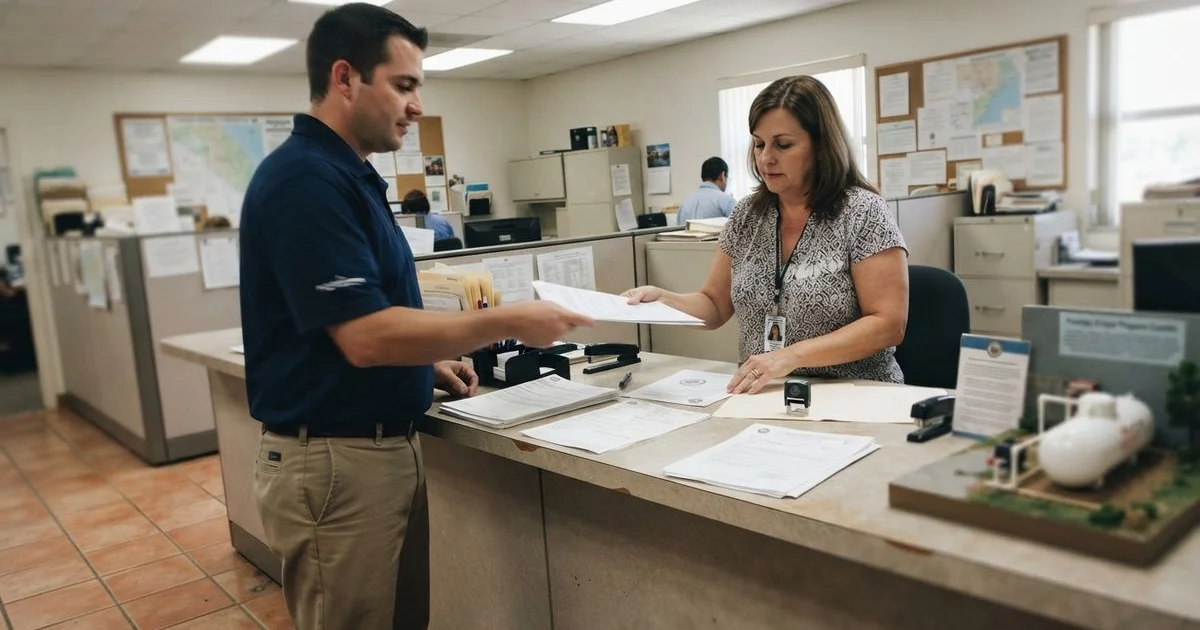
Propane tank installation in Florida is regulated, not a do-it-yourself decision or a simple placement choice. Here is a plain-language overview of the rules that shape where a tank can go and how it has to be installed. This is general information, not legal advice; check with your local building department or a licensed installer for requirements specific to your property.
The rules that matter most
Setback distances. Florida Fire Code, which draws from National Fire Protection Association standards, sets minimum distances between a propane tank and your home, property lines, windows, doors, and other ignition sources. These distances scale with tank size: a small 120 gallon cylinder has different requirements than a 500 or 1,000 gallon tank. A licensed installer determines the exact distance during your site visit, and it is not something to estimate on your own.
Permitting. Most residential installations require a permit from your local building or fire department before work begins. Requirements and processing times vary by county, and larger tanks or underground installs generally involve more scrutiny than a small above-ground cylinder.
The 80 percent fill rule. This is a federal safety standard, not a local ordinance, but it affects every fill you receive. Tanks are never filled past 80 percent of their total capacity, which leaves room for the propane to expand as temperatures rise. Suppliers use calibrated gauges and automatic shutoffs to enforce this during every delivery.
Cylinder recertification. Portable DOT cylinders, the kind used for grills, RVs, and forklifts, require recertification at set intervals, generally every 12 years from manufacture unless a shorter interval is stamped on the tank. Suppliers are required to refuse filling an expired cylinder.
Setback distances at a glance
| Tank size (approximate) | General setback consideration |
|---|---|
| Up to 125 gallons (water capacity) | Smallest required setback distances |
| 126 to 500 gallons | Moderate setback distances, scaling with size |
| 501 gallons and larger | Larger required setback distances from structures and property lines |
These figures are a general guide only. Exact distances depend on the specific tank’s water capacity, whether it is above ground or underground, and any local amendments to the state fire code, so always confirm the precise number with your installer or local building department before finalizing tank placement.
What this means if you are installing or modifying
If you are installing a new tank, your licensed installer should walk you through the setback requirements as part of the site visit, before any excavation or pad work begins. If your property is smaller or has an unusual layout, you may need a variance or an alternative tank placement, which can affect both cost and where the tank ends up sitting.
If you already have a tank and are planning a renovation, like adding a deck, a shed, or a fence, check the setback distance before building near it. Building within the required clearance can create a code violation that surfaces later during a home sale or insurance inspection, even if it goes unnoticed for years.
Underground tanks and additional requirements
Underground propane tanks face extra scrutiny beyond setback distances. Installers need to account for corrosion protection appropriate to your soil conditions, proper depth of burial, and access points for future service and inspection. Because the tank is not visible day to day, keeping a record of its exact location, ideally with a marker or documented measurements from a fixed point like a corner of the house, matters more than it does for an above-ground tank that you can simply look at.
Renting out or selling a property with a propane tank
Property owners who rent out a home with a propane system should confirm the installation was code-compliant when it went in, and keep any permit or inspection records on hand. The same applies when selling: a buyer’s inspector may flag setback issues or an expired cylinder recertification, so resolving those ahead of a sale avoids last-minute negotiation problems. Our guide on buying or selling a Florida home with a propane tank walks through timing and disclosure in more detail.
Finding a licensed installer
Code compliance starts with choosing an installer who actually pulls the permit and follows setback rules, rather than one who treats it as optional. When comparing propane tank installation providers in Florida, ask directly whether permitting is included in their quote and how they handle a site that does not meet standard setback distances. Our directory lists licensed suppliers statewide, and our scoring method factors in verified licensing as part of how we rank them.
FAQ
- Do I need a permit to install a propane tank in Florida?
- Most residential installations do, particularly for larger tanks or underground installs. Your propane supplier or installer typically handles the permit application with your local building or fire department as part of the installation job.
- How far does a propane tank need to be from my house?
- Setback distances depend on tank size and are set by Florida Fire Code, which references National Fire Protection Association standards. Larger tanks generally require greater distances from structures, property lines, and ignition sources than smaller ones. A licensed installer confirms the exact distance required for your tank size during the site visit.
- What is the 80 percent fill rule and is it a legal requirement?
- Yes, it is a federal safety standard, not just a supplier preference. Tanks are filled to only 80 percent of capacity to leave room for propane to expand as temperatures rise, since a completely full tank risks dangerous pressure buildup. Suppliers use tank gauges and automated shutoffs to enforce this limit.
- Who is responsible for code compliance, the homeowner or the installer?
- The licensed installer is responsible for meeting code requirements during installation, but as the property owner, you are ultimately responsible for keeping the setup compliant over time, such as not building a structure or fence within the required setback distance after the fact.
Related on this site
- Browse propane tank installation & leasing providers
- Propane tank installation and leasing costs in Florida: buy vs. lease
- What to expect during propane tank installation, step by step
- Buying or selling a Florida home with a propane tank
- Who is liable when a propane leak causes damage in Florida
- All guides →