Buying or selling a Florida home with a propane tank
By Mei Larsen · Updated 2026-07-22
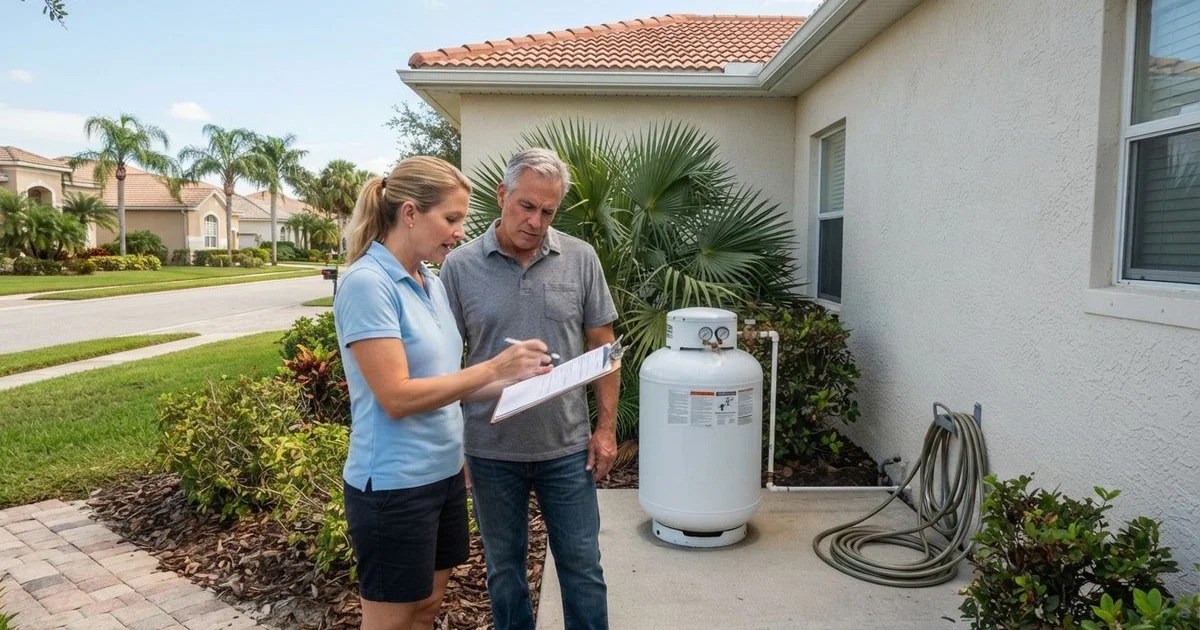
A propane tank adds a layer to a Florida home sale that a lot of buyers and sellers do not think about until it comes up during inspection or closing. Here is what actually matters on both sides of the transaction.
If you are selling
Start by confirming whether you own the tank outright or lease it from a propane supplier. This single fact shapes almost everything else about how the tank is handled in the sale. If you’re curious what a new lease actually costs versus buying, our guide on propane tank installation and leasing costs breaks down the numbers.
- Owned tanks generally transfer with the property like a fixture, but it is worth stating this explicitly in the purchase agreement so there is no ambiguity for the buyer or their lender.
- Leased tanks require checking your lease agreement for transfer terms. Some suppliers make it simple to transfer a lease to a new owner; others require the tank to be removed or the lease bought out before closing. Contact your supplier early in the sale process, not the week before closing.
- Gather your records. Installation permits, any inspection history, and cylinder or tank recertification dates all help reassure a buyer and can speed up their inspection process.
- Decide on remaining propane. A proration for propane left in the tank at closing is common but not automatic; raise it with your agent so it gets documented in the agreement rather than assumed by either side.
If you are buying
- Ask directly: owned or leased? Get this in writing, not just a verbal answer, since it affects your obligations after closing.
- Request the lease agreement if one exists. Review the terms for transfer fees, minimum usage commitments, and what happens if you want to switch propane suppliers later.
- Have the propane system specifically inspected, not just covered as a footnote in a general home inspection. Ask about tank condition, corrosion, setback compliance, and whether any cylinders on the property are within their recertification window.
- Clarify the propane proration, if any, before you sign, so there are no surprises about what you owe at closing for fuel left in the tank.
Ownership vs. lease: what changes at sale
| Owned tank | Leased tank | |
|---|---|---|
| Transfers with the sale | Typically yes, as a fixture | Depends on the lease agreement |
| Who to contact before closing | Not necessary for the tank itself | The leasing propane supplier |
| Buyer’s ongoing obligation | None beyond normal use | May need to assume lease terms or set up new supplier account |
| Risk if not addressed early | Minor, mostly a documentation gap | Can delay closing or create post-sale disputes |
Inspection issues worth flagging early
A propane-specific inspection can catch things a general home inspector might miss: whether the tank meets current setback distances (older installations sometimes predate current code and are grandfathered, but a buyer should know this), visible corrosion or damage, and whether portable cylinders on the property have current recertification stamps. Finding these issues before closing gives both sides room to negotiate a repair credit or resolve it directly, rather than discovering a problem after the sale is final.
A note on manufactured and mobile homes
Propane tank ownership questions come up especially often with manufactured and mobile homes, where a tank may belong to the previous owner, the park, or a supplier rather than transferring automatically with the unit. If you are buying a mobile or manufactured home, confirm tank ownership as a separate line item from the sale of the home itself, since it is easy to assume it works the same as a site-built house when it often does not.
Timing the sale around your propane account
Coordinate the timing of any final delivery, account closure, or transfer with your closing date rather than leaving it until after the fact. A seller who cancels service too early risks an uncomfortable gap if closing gets delayed, while a buyer who waits too long to set up new service risks moving in without hot water or a working range. A short call to your propane supplier a couple of weeks before closing, on either side of the transaction, avoids both problems.
Setting up service after closing
If you are a new owner taking over an existing tank, contact the current supplier to transfer service into your name, or shop around if you would rather switch providers. When comparing propane tank installation and service providers in Florida, ask about transfer fees for existing leased tanks and how quickly they can get you set up with your first delivery. Our directory covers licensed suppliers statewide, and our scoring method explains how we weigh service reliability when ranking them.
FAQ
- Does the propane tank stay with the house when it sells?
- It depends on ownership. If the seller owns the tank outright, it typically transfers with the property as part of the sale, similar to a fixture. If the tank is leased from a supplier, the lease terms determine whether it transfers, needs to be assumed by the buyer, or gets removed before closing.
- How do I find out if a propane tank is owned or leased before buying a home?
- Ask the seller directly and request a copy of any lease agreement if one exists. A quick look at the tank for a supplier's branding or asset tag can also be a clue, though it is not a substitute for confirming in writing before you close.
- Should I get the propane system inspected before buying a home?
- Yes. A general home inspection does not always cover propane-specific items closely, so ask specifically about tank condition, setback compliance, line integrity, and cylinder or tank recertification status if applicable. A dedicated propane inspection is worth the cost on a home with an older system.
- What happens to remaining propane in the tank when a home sells?
- This varies by agreement between buyer and seller. Some sales include a proration where the buyer reimburses the seller for propane left in the tank at closing, similar to how a fuel oil tank is often handled. This should be spelled out in the purchase agreement, not assumed.
Related on this site
- Browse propane tank installation & leasing providers
- Propane tank installation and leasing costs in Florida: buy vs. lease
- What to expect during propane tank installation, step by step
- Propane tank laws and permits in Florida: what homeowners need to know
- Hurricane season propane prep: keeping your tank filled and your home ready
- All guides →