Moving to Florida: setting up propane service for the first time
By Mei Larsen · Updated 2026-08-01
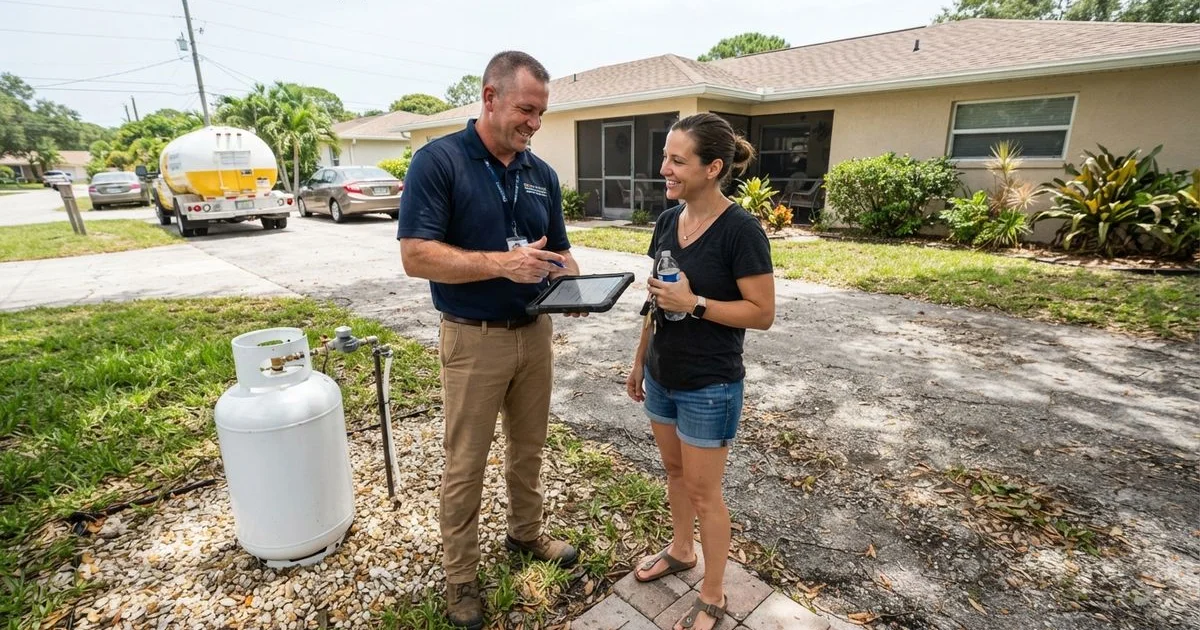
Moving to a new state comes with a long list of things to set up, and propane is easy to overlook until you need hot water or a working range. Because Florida’s propane market runs on a service-area model rather than a single fixed location, most residential propane delivery providers cover a broad territory, so the supplier you had elsewhere almost certainly does not operate here. Here is a practical walk-through for getting set up for the first time.
Step one: figure out what you’re working with
If you bought an existing home, start by checking whether it already has a propane tank and an active or recently closed account. Ask the seller or your real estate agent for supplier information, and look for any lease agreement if the tank is not owned outright. If you are moving into a rental, ask your landlord or property manager the same questions.
If you are building new or moving into a home with no existing propane infrastructure, you are starting from scratch: choosing a tank size, an installer, and a supplier all at once.
Transferring an existing account vs. starting new
| Situation | What to do |
|---|---|
| Existing tank, active account | Contact the current supplier to transfer service into your name, or shop for a new supplier if the tank is owned (not leased) |
| Existing tank, leased | Check the lease terms for transfer requirements before assuming you can switch freely |
| No existing tank | Get quotes for tank installation, sizing, and initial setup from local providers |
| Uncertain what’s there | Have a local supplier do an assessment visit before assuming either way |
What to check before your first delivery
- Confirm tank ownership status so you know whether you are locked into a specific supplier or free to shop around.
- Get a sense of your typical usage. If propane covers heating, hot water, and cooking, your needs differ significantly from a home where it only fuels an outdoor grill or pool heater.
- Ask about delivery type options: will-call, automatic delivery, or a combination, and what fits your household’s habits.
- Set expectations on timing. New installations take longer than transferring an existing account, so plan ahead if you know you will need propane soon after moving in.
Getting your first quote
Because Florida has a large, competitive market for propane suppliers, it is worth getting more than one quote rather than defaulting to whoever the previous owner used. Ask each supplier about their delivery area coverage relative to your new address, current pricing, contract terms, and whether tank installation (if needed) is included or handled by a separate installer.
If you are unsure what size tank fits your household’s needs, a tank size calculator that factors in home size and how you plan to use propane, heating, hot water, cooking, or a mix, gives you a reasonable starting range before you start calling around.
What’s different about Florida specifically
Coming from a colder climate, it is easy to assume propane demand and pricing follow the same seasonal pattern you are used to. In Florida, propane usage tends to be steadier year-round rather than spiking hard in winter, since it is more commonly used for water heating, cooking, pool heating, and backup generators than as a primary heat source. That changes how suppliers structure delivery schedules and, for some households, means a smaller tank than what you had up north still covers your needs comfortably.
If you are moving into a coastal or hurricane-prone area for the first time, factor that into your setup conversation from day one rather than treating it as a separate task later. Ask your new supplier directly about their storm-season service, typical response times after a major weather event, and whether they proactively schedule pre-season top-offs for regular customers.
Settling in
Once service is active, take a few minutes to note where your tank and main shutoff are located, save your supplier’s contact information somewhere easy to find, and if you are moving in ahead of hurricane season, consider scheduling an early top-off rather than waiting until your first natural fill cycle. If this is your first delivery with a new supplier, our guide on what to expect when the propane truck arrives walks through the visit itself.
To compare propane suppliers across your new area, our scoring method explains how we weigh pricing, reliability, and service quality, which is a useful starting point when you do not yet have a personal track record with any local company.
FAQ
- How do I know if my new home already has a propane tank set up?
- Check with the seller or your real estate agent for existing supplier information and any lease agreement, and do a visual check of the property for a tank if it was not obvious during the home tour. If you cannot find clear information, a local propane supplier can typically assess an existing setup during a service call.
- How long does it take to start propane service in a new home?
- If a tank and account already exist, transferring service can happen within a few days. If you need a completely new installation, expect one to three weeks for permitting plus a day for the physical install, so plan ahead rather than waiting until you need hot water.
- Do I need propane if my new home already has electric appliances?
- Not necessarily, but many Florida homes use propane for specific things like a pool heater, outdoor kitchen, fireplace, or a backup generator even if the main systems are electric. Check what's already piped for propane versus what would need new installation before assuming you don't need it.
- Is propane service different in different parts of Florida?
- The core service is similar statewide, but availability of specific delivery types, response times, and local pricing can vary between more urban areas like Tampa and more rural service areas. Check what's available in your specific area rather than assuming state-wide uniformity.